

How a Silicone Sock Can Improve Your Prusa MK3’s Performance and Longevity
Stable conditions are crucial for a 3D printer’s ideal performance. The Silicone Sock Prusa MK3 is a simple upgrade that improves temperature stability, protects components, and enhances print quality. This article explains its benefits and installation process.
What Is a Silicone Sock?
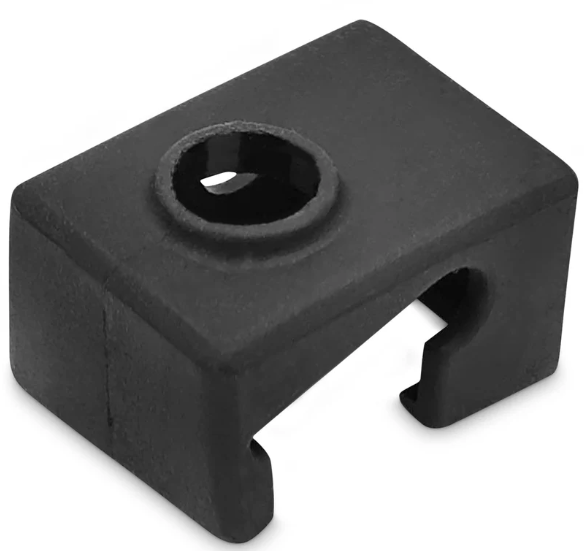
The heat resistant cover, which wraps around the heater block of a hotend, is known as a silicone sock. This prevents heat loss, prevents filament build-up, and protects components from dust and airflow. In this way, it helps to maintain the printer and increases its life span. Let’s see why you should use it and how it can be helpful for you.
Why Use a Silicone Sock on the Prusa MK3?
Silicone Sock Prusa MK3 helps maintain the temperature stable and reduces maintenance. It protects the hotend from external contaminants and prevents direct contact between components and the hotend.
Benefits of a Silicone Sock for Your Prusa MK3
1. Improved Temperature Stability
Smooth extrusion requires a stable temperature. Silicone Sock MK3 prevents heat fluctuations, so you can always print with the same temperature.
2. Faster Heat-Up Times
Instead of heat loss (normally included in a block heater connection), a silicone sock insulates the heater block to reduce temperature loss. This reduces the time needed to print to achieve a high initial temperature.
3. Better Filament Flow and Adhesion
Extrusion problems can be caused by uneven heating. It uses a silicone sock for even heat distribution, better filament flow, and better first layer adhesion.
4. Protection from Filament Build-Up
The hotend can stick, causing clogging and print failures. This prevents melted plastic from accumulating on the heater block, and a silicone sock is used as well.
5. Extended Hotend Lifespan
Hotend components are worn out due to exposure to excess heat, dust and residue. A hotend is shielded by a silicone sock, prolonging its life.
6. Reduced Maintenance and Cleaning
Cleaning a hotend can be a laborious job. Less Debris Build-up — Silicone Sock MK3 helps reduce the debris build-up and minimizes maintenance efforts.
7. Prevention of Heat Creep Issues
Heat creep occurs when the heat radiates from the filament path up, making the machine jam. These problems are regulated by a silicone sock which prevents heat transfer.
How to Install a Silicone Sock on Your Prusa MK3
Installing a Silicone Sock MK3 is easy. Here are some steps that will ensure a secure fit.
Step 1: Gather Necessary Tools
You will need:
- A compatible silicone sock
- Heat-resistant gloves (optional)
- A clean, dust-free workspace
Step 2: Stop the Printer and Cool it
The printer should be switched off and have cooled down completely before installation.
Step 3: Remove Residual Filament
Use a soft brush or cloth to clean any filament buildup from the heater block.
Step 4: Install the Silicone Sock
Place the silicone sock on the heater block, stretch it, and slide it over it. Make it as snug as possible but not cover the nozzle opening.
Step 5: Test the Installation
Cross-check that the sock is inside the printer, set it to turn on, and heat it to check that it’s in there and working.
Choosing the Right Silicone Sock for Your Prusa MK3
1. Material Quality
It’s durable and made out of high-quality heat-resistant silicone.
2. Proper Fit for Your Hotend
To make sure it’s securely placed on the hotend of the Prusa MK3, choose a specially designed sock for the hotend.
3. Thickness and Durability
The insulation from a thicker sock is better, however, the extra insulation shouldn’t interfere with nozzle clearance.
4. Brand Reputation and Reviews
These user reviews are able to identify the best options in terms of long-term reliability.
Common Issues and Troubleshooting
Although silicone socks are simple to use, minor problems may occur. Here’s how to resolve them.
1. Loose or Misaligned Fit
Try to ensure a tight fit sock to the heater block to avoid heat loss.
2. Reduced Nozzle Clearance
If the sock interferes with the filament extruding, adjust it.
3. Frequent Wear and Tear
Several removals can damage the sock. Only remove it when necessary.
4. Accidental Damage from Overheating
Check the sock’s temperature limits to avoid melting or degrading.
Frequently Asked Questions
1. How long does a silicone sock last?
Depending on its use and the quality of its material, a high-quality sock can last several months to a year.
2. Can I clean a silicone sock?
Yes, wipe it with warm water and a soft cloth. Avoid harsh chemicals.
3. Will a silicone sock affect my print settings?
They will need no major adjustments, and if the heat-up times improve only slightly.
4. Is a silicone sock required for every 3D printer?
It is not necessary, but it improves performance greatly, especially for high temperature prints.
5. Can a silicone sock fully prevent clogs?
It helps reduce buildup, but regular maintenance is necessary.
Conclusion
The Silicone Sock MK3 improves print quality, stabilizes temperature, extends hotend life. This is an inexpensive upgrade that helps simplify maintenance while reducing maintenance costs overall, but the workhorse printers. Better 3D printing results depend on whether you install one today.

